As I I write this it’s Valentine’s Day in the Philippines, an occasion that I have mixed feelings about. Commercialized and corny; the bane of my traffic-screwed pre-pandemic life; nowhere to eat or to go because everywhere is full and the flowers are 10x more expensive.
And yet: last year, I stopped by the cemetery with a single gerbera to place on the columbarium where my husband’s ashes rested. On our very first Valentine’s Day, when I was 18 and part of the make-up and costume team of a theater production at UPLB, I had ‘tricked’ him into meeting me at Tony’s Grocery and surprised him with an orange gerbera. Sweet, surprising — the very first time he received a flower from a girl.
How did I go from that to my cynical working years when I would literally resist the urge to shoulder between holding-hands-while-walking couples at the MRT station? Complicated.
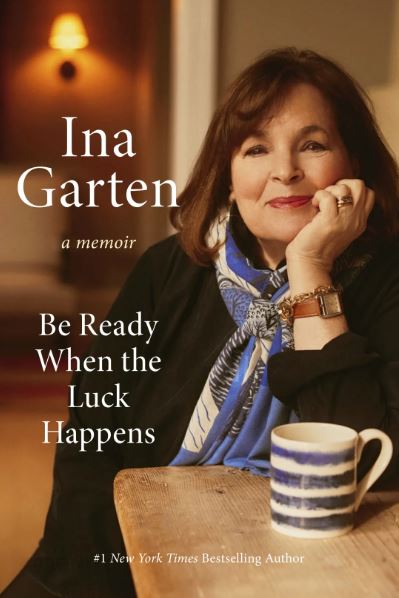
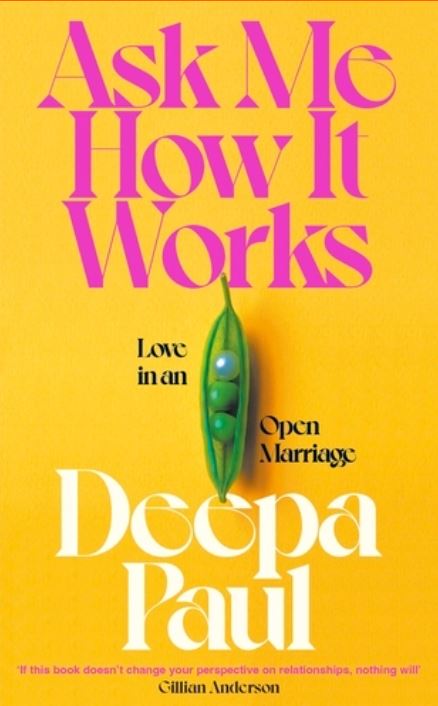
I think about my relationship to this “holiday” I am also thinking about two books that are very different from each other but, in my head, seem like different instruments in the same symphony, if that makes sense. Both have taken space in my head, popping up for me to think about in the oddest moments.
Be Ready When the Luck Happens is Ina Garten’s memoir. Watching Barefoot Contessa was a form of relaxation for me, and all I knew about her was her simple but luxurious recipes, her gorgeous house and garden, and her idyllic marriage to Jeffrey. It was such a surprise to read about her lonely childhood: neglected and abused, emotionally but sometimes physically by her parents, who simultaneously expected a lot out of her but also did not think she would amount to anything substantial. Her book details how she started to blossom after getting married to Jeffrey, and the long and hard road it took for her to know who she really was and what she wanted out of life, and how sometimes these choices — like impulsively buying a store in the Hamptons when she and her husband were settled in Washington DC — seemed to be exactly the wrong choice for a stable relationship.
Ask Me How It Works is the memoir of Deepa Paul, a Filipina-Indian woman in Amsterdam living in an open marriage. In it, Deepa describes her own childhood, the lasting impact of a Catholic school upbringing, falling in love with her husband as life took them to Singapore and then the Netherlands, and slowly realizing who she was: sexually curious and open to different experiences, in seeming contradiction to what every “good” wife is supposed to do. (Also: Deepa and I used to work in the same office and I’ve been a huge fan of her writing and photography ever since her blogger days.)
In Ask Me How It Works, Deepa lays out the all-too-familiar-things we hear in divorce-less Philippines. Marriage is about compromise. It’s about accepting the other person’s faults. It’s about putting them first. Which somehow also means subsuming your own wants and desires. In a marriage, the married unit is most important. Your individual growth takes a back seat for the sake of the stability of the duo.
In Ina’s memoir, she writes about how Jeffrey challenged her to do something with her life (a shock – she says “I thought getting married was what I was supposed to be doing?”) and how, when she started following that advice and impulsively started her own food business, she began chafing against the traditional role still expected of her — so much so that she asked for a separation. We’re told that married couples should be together (I guess to prevent straying more than anything), so Ina and Jeffrey’s set-up, where they live apart for long periods of time, seems counterintuitive. You’re not supposed to expand your business while your husband is called to open a branch of his bank in Japan. You’re supposed to let your own growth take a back seat and support him. Right?
Starting your own foodie empire seems miles away from asking to open your marriage, but what struck me about both books is that both women found structures that supported the choices that they made and the lives they wanted to lead with their husbands — though intense, radical and incredibly honest communication. In Deepa’s book, she writes unflinchingly as each facet of polyamory required her and her husband to confront their own expectations and biases, and find a way through to challenge those assumptions. In Ina’s memoir, Jeffrey — open-minded for a man of his generation — still had a lot of work to do to confront his own internalized model of what a husband should be, and also had to learn to ask for what he wanted out of the marriage.
In both relationships, I was struck by how both members of the married unit could grow. The desires of both the wife and the husband could be supported. There was a way forward where there wasn’t one spouse grimly powering through and bearing it. It took a lot of work and talking and confronting each other’s deepest fears and most triggering emotions, but it could be done.
I wasn’t used to hearing that.
I think the reason why both books occupy such a space in my mind is because continue to reflect on my own marriage. Hindsight and regret hang so closely with grief that I can’t help it.
My husband passed a few months after our 19th anniversary. We had weathered so much during those nearly two decades. I feel like we had settled into a good rhythm. We were best friends. We made each other laugh. There was nothing I liked more than to hang out with him. The fact that we didn’t have more years together to experience what else life could offer us as a unit — well, that hurts.
But also…there were times when I remember holding back. Wanting to talk to him about my own wants, and deciding not to. Not even being able to articulate how I wanted to grow, because turning over that particular pot might unearth things that would rock us, and I didn’t want to rock. Wanting things to change and talking myself out of it, because I just didn’t think change was possible. “I married the man I married, I made that choice, and now I must live with it.” I realize that sounds so grim, and our marriage wasn’t some forced march through the Russian plains… But yes. I think there were ways in which I wanted our duo to grow and improve, but I just didn’t have the vocabulary or imagination to see that through.
Which is all moot, I know. He is gone and I am alone to ruminate on what might have been.
And maybe that’s what this is – what the impact of these books are to me. They reflect a path I could have taken, and imagining those possibilities is…an interesting thought exercise, put it that way.
In any case, sometimes I also feel that the current life I have is fine by me as well. When I think of the arduous and prickly and soul-baring communication that needs to happen for couples to discard conventional wisdom and find what actually works for them (as Ina and Jeffrey and Deepa and Marcus wrote) I also kind of feel…well at least now I only have myself to deal with. Most days that’s hard enough.
***
I got Be Ready When the Luck Happens on Kindle, while my copy of Ask Me How It Works came via Mina V. Esguerra at the Frankfurt Book Fair! Hey, Philippine book stores, baka naman we can bring Deepa’s book here? She’s only long-listed for the 2026 Women’s Prize for Non-Fiction lang naman?
***
In other reading news: from October 2025 to January 2026 I have been binge-reading Ilona Andrews Kate Daniels series: all 10 books in the main series, plus the side novellas and Kate Daniels World books. All I can say now is: Iron and Magic Book 2 when? WHENNNNN?
 Bianca Mori